
Whether troubleshooting poor dialysis flow or performing routine access maintenance, a fistulogram identifies narrowing or other problems within your dialysis access so they can be treated before they disrupt dialysis. Soris Pain & Vascular Institute performs diagnostic and interventional fistulograms to keep dialysis on schedule.
Dialysis & Catheter Access
Fistulogram
Soris Pain & Vascular Institute
What Is a Fistulogram?
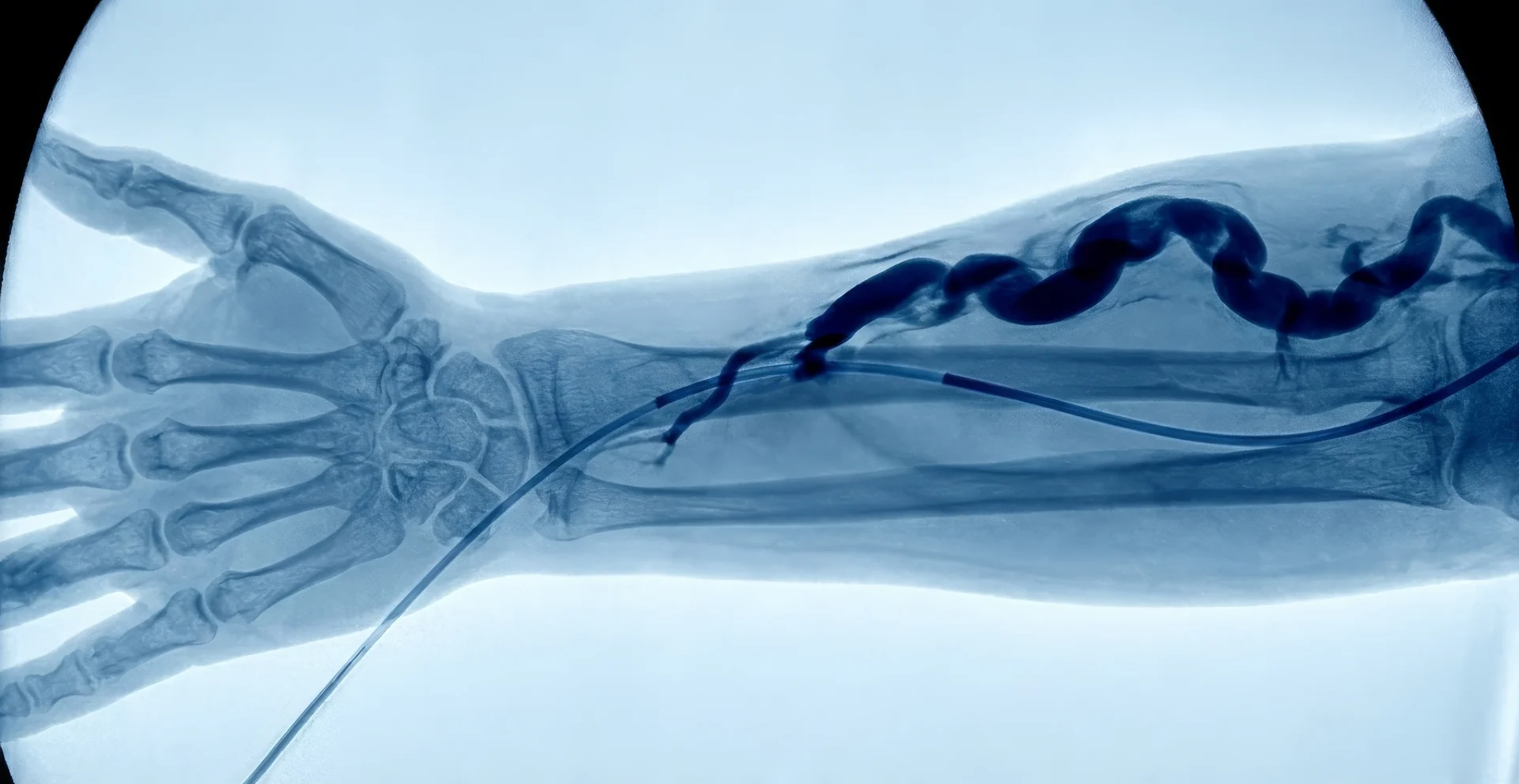
A fistulogram is a fluoroscopic imaging study in which a vascular specialist injects iodinated contrast dye through a needle placed in the dialysis fistula or graft.
Real-time X-ray images then capture the entire access circuit from the arterial inflow to the central venous outflow, identifying stenoses, thrombus, and structural abnormalities.
Our physicians perform fistulograms at Soris Pain & Vascular Institute. Patients whose access is a synthetic conduit need a Graftogram instead.
Soris Pain & Vascular Institute combines diagnostic imaging with same-session treatment. If the fistulogram reveals a narrowing, the team performs balloon angioplasty immediately to restore flow without a separate procedure visit.
Procedure
What to Expect During a Fistulogram
1
Before the Procedure
Soris Pain & Vascular Institute reviews recent dialysis flow records and physical exam findings. No fasting is required. Patients should avoid the access site for needle placement the day before the procedure.
2
During the Procedure
A small needle punctures the fistula or graft. Contrast dye flows through the access under fluoroscopic imaging. The entire circuit is mapped in 15 to 20 minutes.
If a stenosis appears, angioplasty adds 20 to 30 minutes.
3
After the Procedure
Pressure is applied to the puncture site for 10 to 15 minutes. Most patients resume dialysis at their next scheduled session. Soris Pain & Vascular Institute provides the results to the referring nephrologist the same day.
Benefits
Benefits of Fistulogram
Same-Session Diagnosis and Treatment
Combining imaging with angioplasty eliminates the delay between diagnosis and treatment. Soris Pain & Vascular Institute restores dialysis access in a single outpatient visit.
Complete Circuit Visualization
Fistulogram maps the entire access from arterial anastomosis to central vein. Soris Pain & Vascular Institute identifies problems that office-based ultrasound may miss, including central vein stenosis and venous outflow obstruction.
When a Fistulogram Is Ordered
When a Fistulogram Is Ordered
Fistulogram evaluates a failing native access: fistula stenosis, thrombosis, pseudoaneurysm, poor dialysis flow, and prolonged bleeding after needle removal. Soris Pain & Vascular Institute uses it as the definitive study before dialysis access revision.
A clotted access is treated with Declot. Patients using a tunneled catheter while an access matures are managed through CVC Placement.
Collaboration
Your Dialysis Access Team
Our physicians perform fistulograms at Soris Pain & Vascular Institute. The team manages the full lifecycle of dialysis access from creation to surveillance.
FAQ
Common Questions About Fistulograms
Does a fistulogram hurt?
Does a fistulogram hurt?
Local anesthesia numbs the access site. Patients feel pressure during contrast injection. Soris Pain & Vascular Institute keeps the procedure comfortable throughout.
How often do dialysis patients need fistulograms?
How often do dialysis patients need fistulograms?
Soris Pain & Vascular Institute recommends surveillance fistulograms when flow rates decline or dialysis alarms become frequent. Some patients benefit from scheduled surveillance every 6 to 12 months.
Can problems found on fistulogram be fixed immediately?
Can problems found on fistulogram be fixed immediately?
Stenoses identified during fistulogram are treated with balloon angioplasty in the same session. Soris Pain & Vascular Institute eliminates the need for a second procedure visit.